Your Cart is Empty


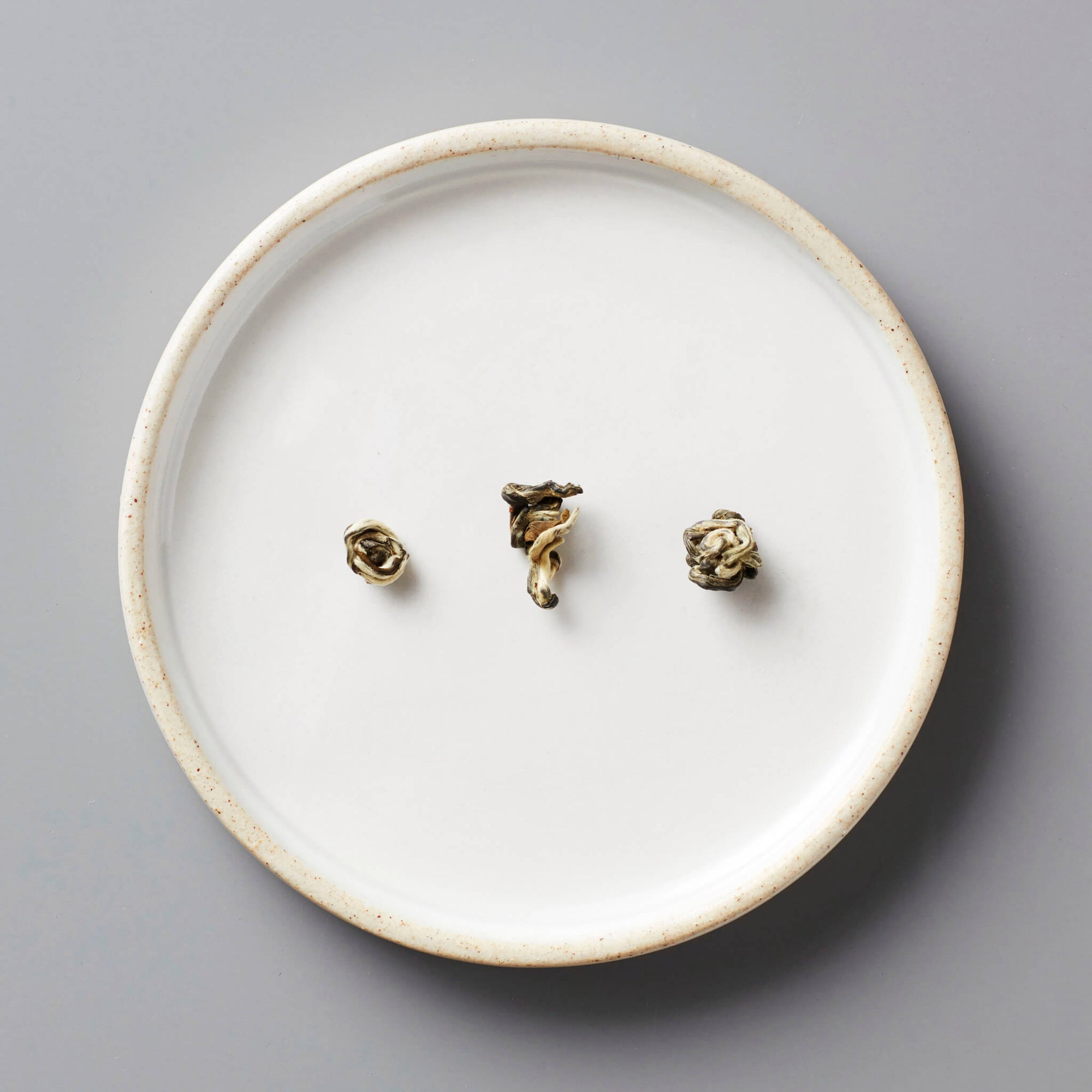

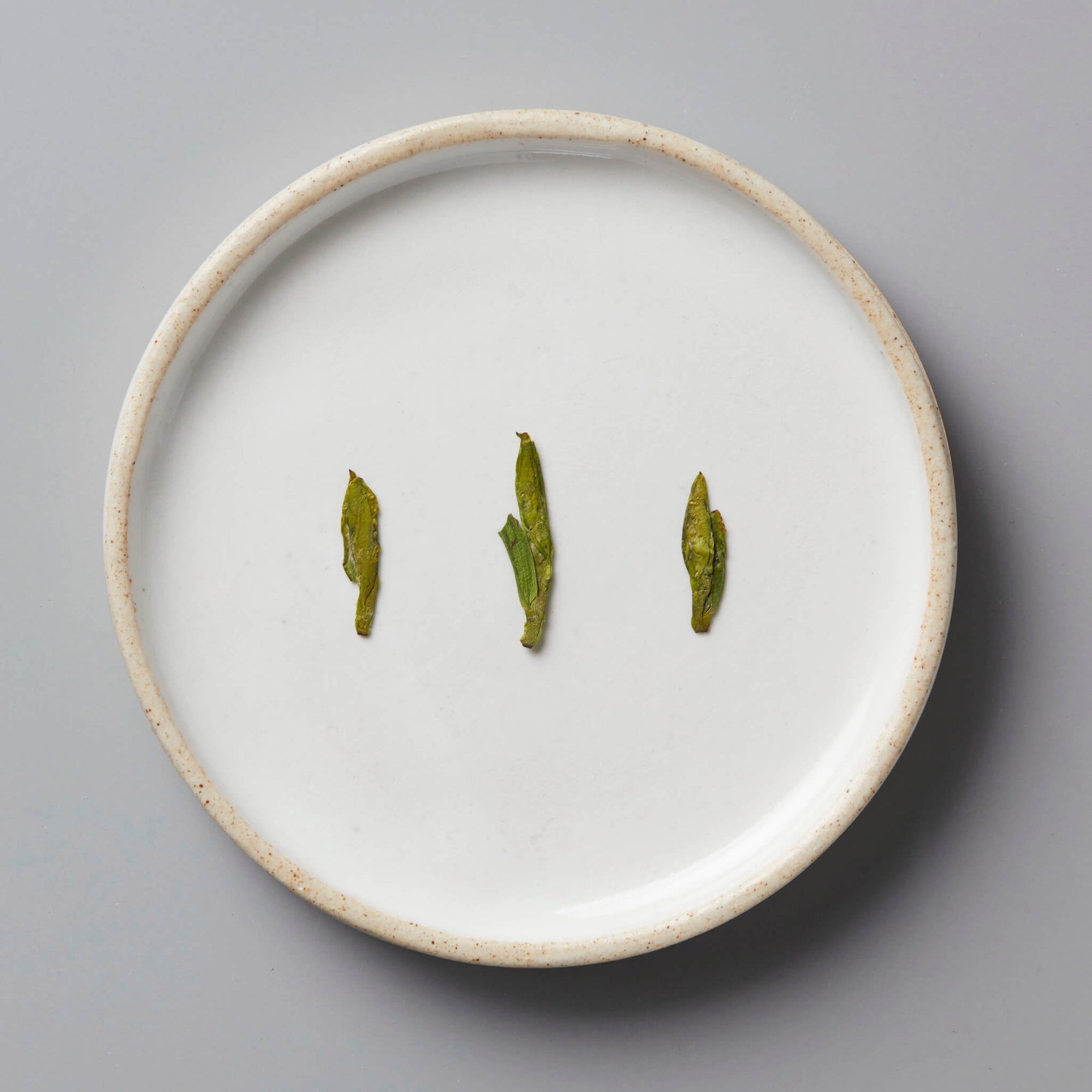

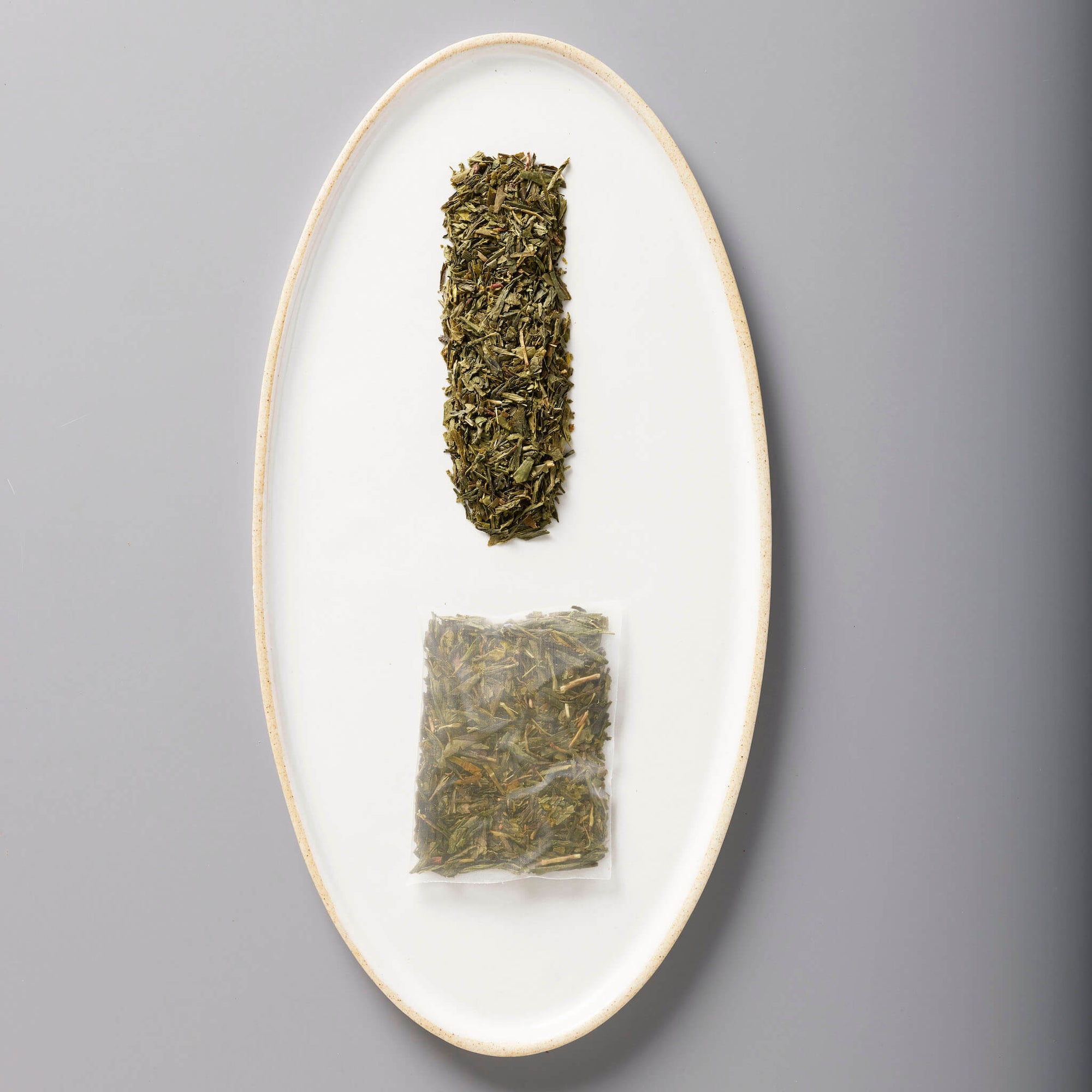

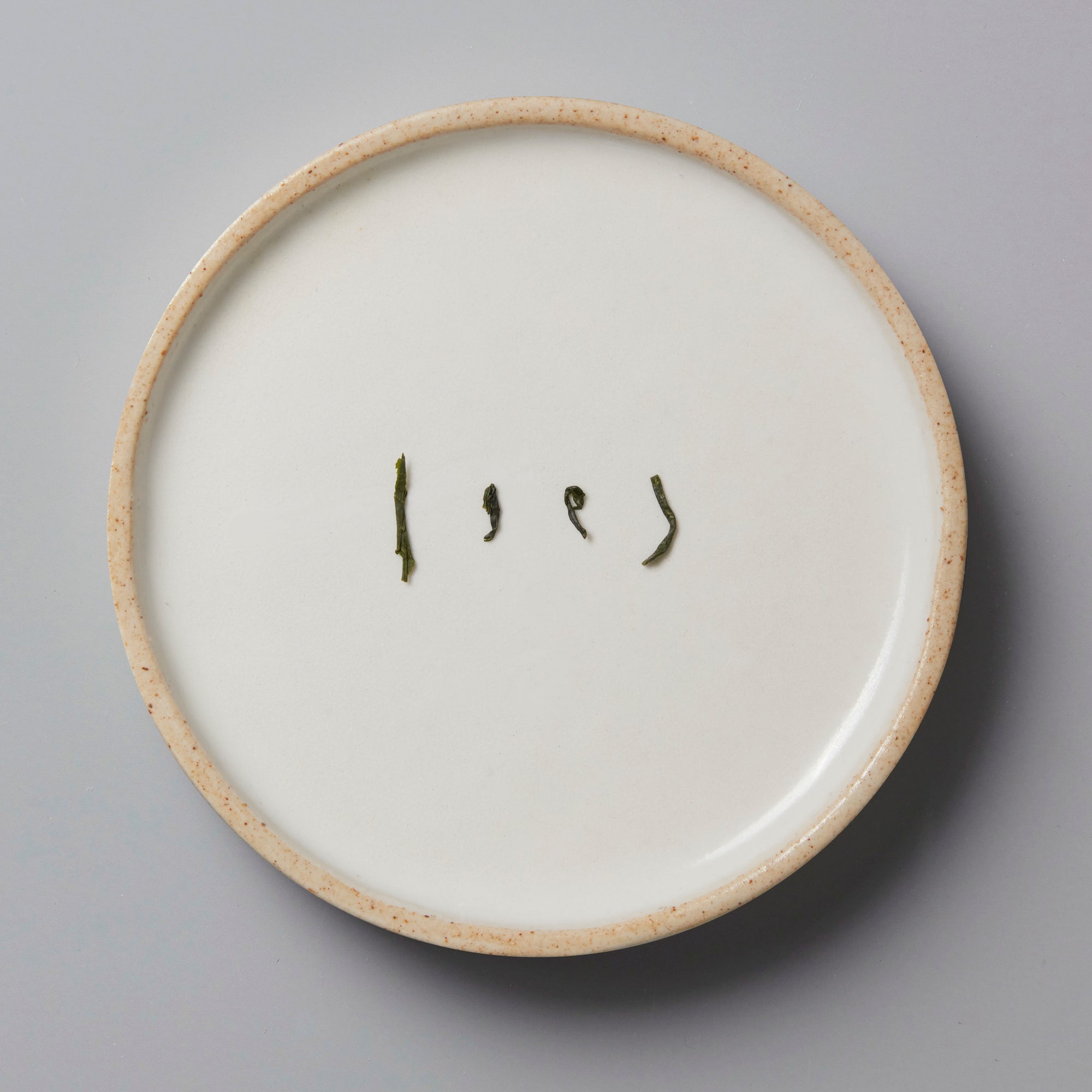





Exploring Tea Types: Oolong Tea
Oolong tea is a partially oxidized tea known for its wide range of flavors and styles, crafted through a unique process of bruising, fixing, and rolling.

This is the second of five articles that explore the well-recognized categories of tea: White, Green, Oolong, Black,andDark/Puer. Though all true tea comes from the same plant species, Camellia sinensis, each type varies dramatically in taste, aroma, and chemical composition due to differences in how the leaves are processed.
Here we explore green tea.
Green tea is the second most consumed tea type in the world, accounting for nearly 20% of global tea consumption. But what exactly makes green tea green?
In the simplest terms, green tea is tea that has been plucked, withered, fixed, and dried. It’s the least oxidized of the five major tea types, and that’s due to one defining step: fixing.
Fixing refers to the application of heat to stop enzymatic oxidation in the tea leaf. If you’ve read our Tea, Typology, Explained article, you’re familiar with this step. Think of it like slicing an apple. If you leave it on the counter, it browns, that’s oxidation. But if you bake it into a pie, it stays pale. Heat halts the browning process, that’s fixing.
In green tea production, fixing is done (almost) immediately after plucking. This rapid step preserves the tea’s green color and fresh flavor, locking in the bright, vegetal, and umami notes the category is known for.
Because of its minimal processing and “shelf-life”, green tea is considered the original tea type.
Free amino acids are largely responsible for the sweet and umami taste associated with green tea. Tea leaves also contain an abundance of catechins, plant polyphenols that contribute to both flavor and potential health benefits. When catechins are exposed to polyphenol oxidase (PPO) enzymes during oxidation, they combine to form compounds like theaflavins and thearubigins, which are found in high concentrations in black tea.Theaflavins and Thearubigins dominate the flavor profile, resulting in more bitterness and astringency.
Because green tea undergoes minimal oxidation, it retains high levels of these original catechins, especially epigallocatechin gallate (EGCG), as well as the sweetness and umami taste. ECGC is a potent antioxidant linked to various health benefits. This preservation of catechins is one of the primary reasons green tea is studied for its potential effects on human health.
Green tea has long been associated with health, but modern research offers a clearer view of its potential benefits, grounded not in myth, but in chemistry. Antioxidants like EGCG help neutralize free radicals in the body, which may reduce oxidative stress, a factor linked to aging, inflammation, and chronic diseases.
Beyond antioxidants, green tea contains a modest amount of caffeine and L-theanine, an amino acid that promotes relaxation without drowsiness. Together, these compounds may support mental alertness and focus, offering a calm, sustained energy that many drinkers describe as feeling both awake and grounded.
Some studies also suggest that green tea may support cardiovascular health by improving blood vessel function and modestly reducing LDL cholesterol. In addition, early research indicates a potential link between regular green tea consumption and lower rates of cognitive decline in aging populations, though more long-term studies are needed.
What sets green tea apart is its high catechin content, made possible by minimal oxidation during processing. This makes it a compelling option for those looking to enjoy both flavor and function.
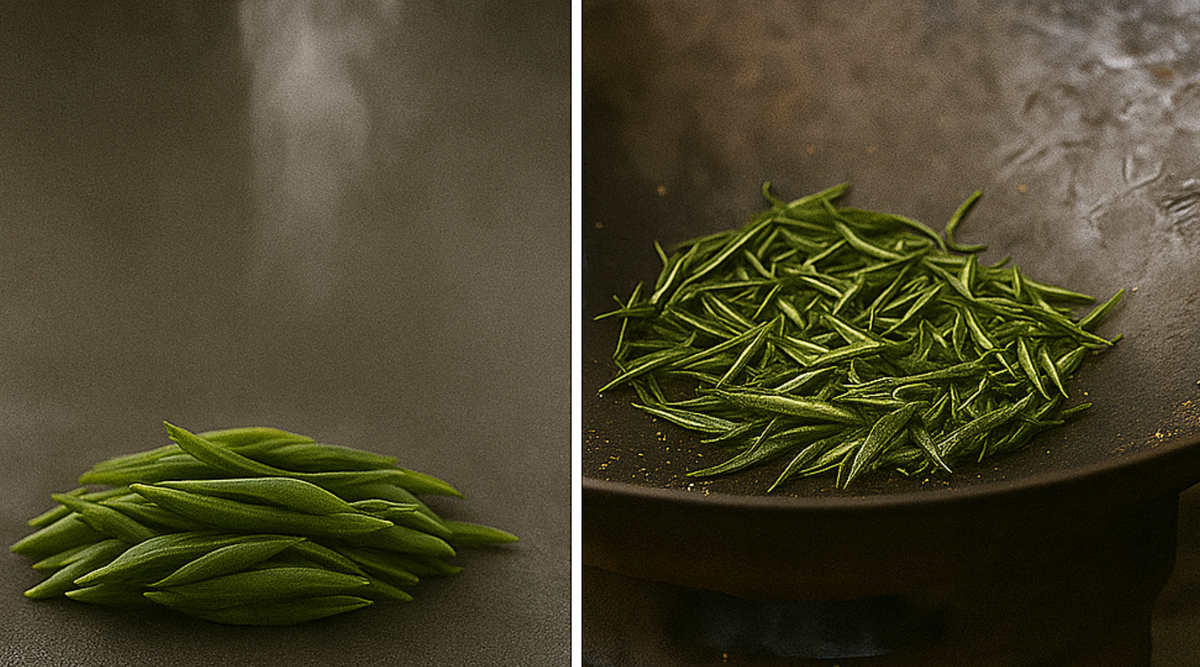
Despite its simplicity, green tea is incredibly diverse, shaped by region, harvest season, cultivar, and leaf style. One of the most important distinctions lies in how the tea is fixed. While fixing is universal in green tea processing, the method varies widely between regions.
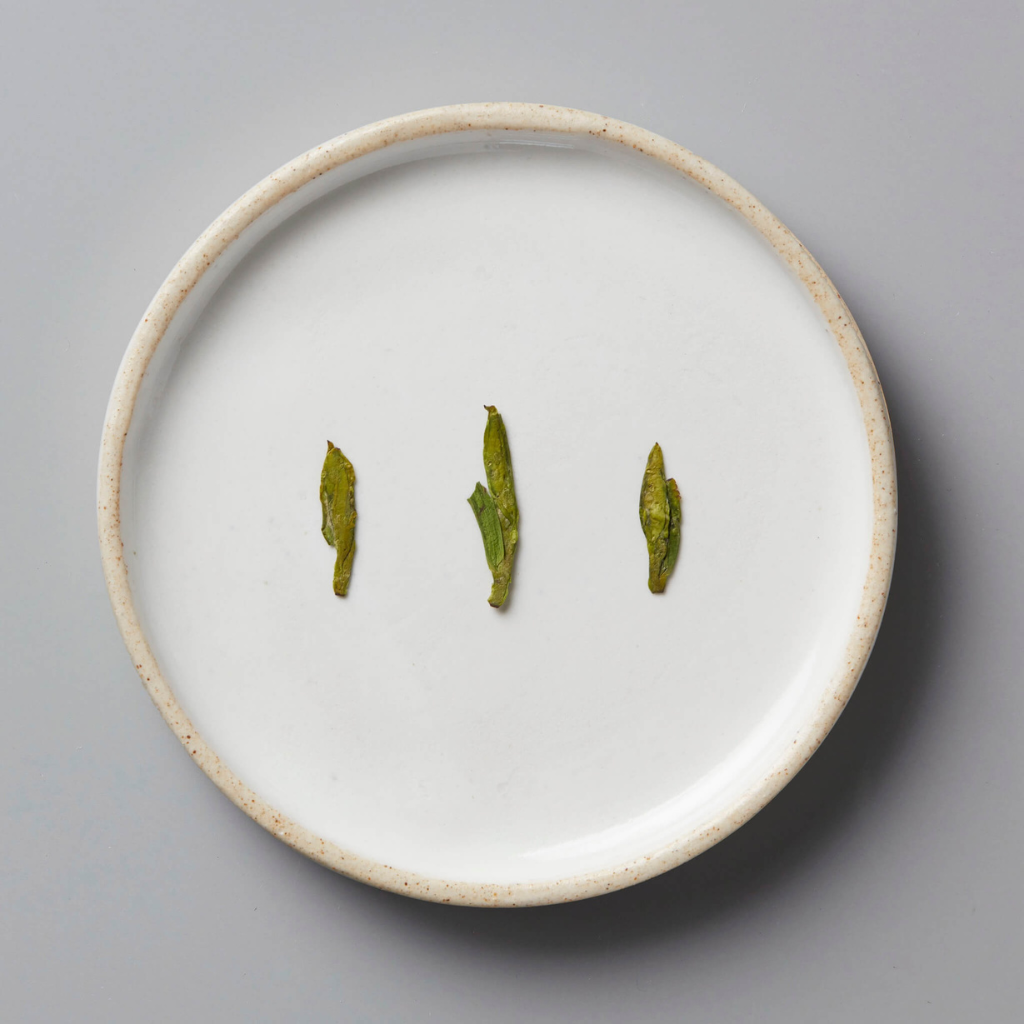
In China, most green teas are pan-fired, heated in a dry wok or drum. This method slows the fixing process slightly, allowing a touch more oxidation than steaming. As a result, pan-fired green teas tend to have:
Examples include: Longjing, Liu’an Guapian, and Biluochun.
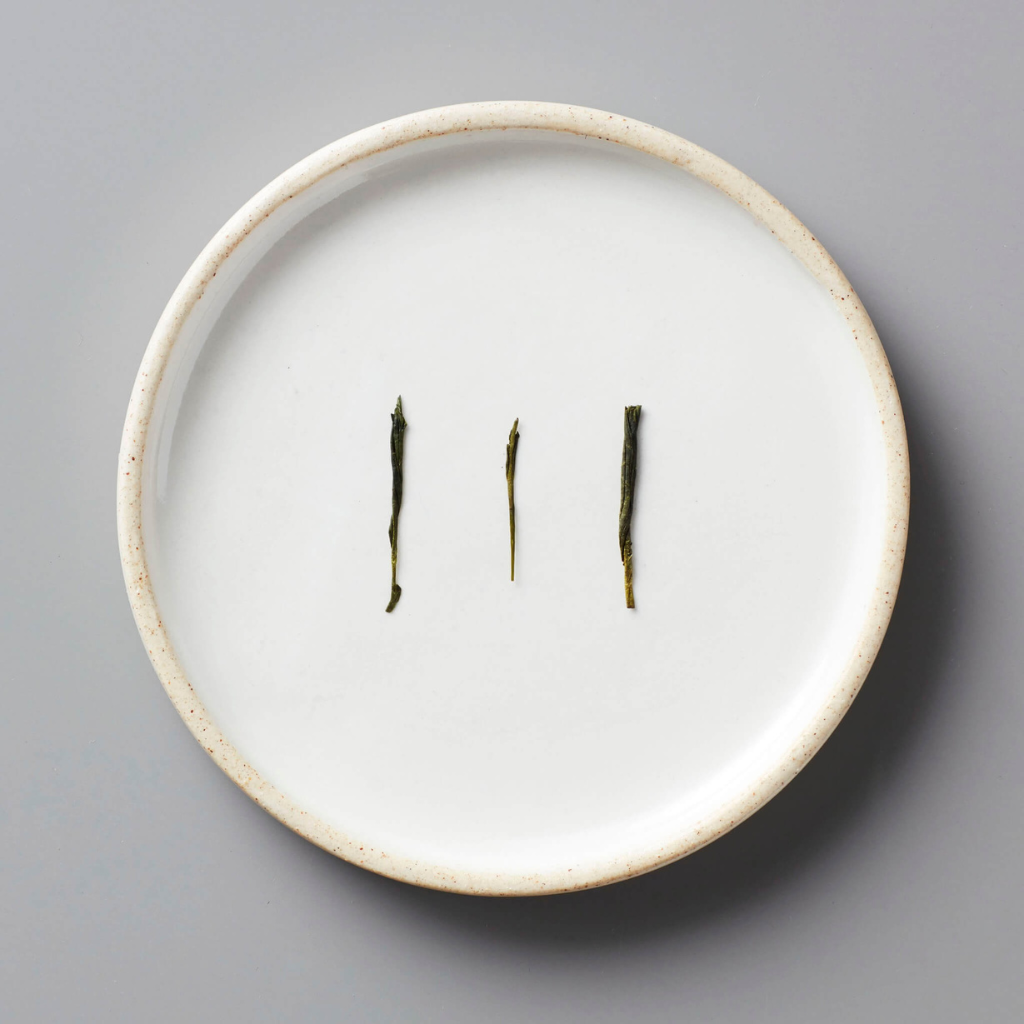
In Japan, most green teas are steam-fixed, which is a high-heat vapor treatment applied immediately after withering. This fast process halts oxidation more quickly, locking in chlorophyll and amino acids. Steamed green teas are known for:
Japanese steamed green teas are often further categorized by steaming time:
| Asamushi (Light) | Chumushi (Medium) | Futsumushi (Standard) | Fukamushi (Deep) |
|---|---|---|---|
| ~20–40 sec | ~40–80 sec | ~30–60 sec | 80+ sec |
| Bright, clear liquor; delicate aroma | Balanced, rounded flavor and body | Typical everyday sencha profile | Cloudy liquor; strong umami, rich texture |
Each style brings out different aspects of the leaf—light steaming highlights brightness and clarity; deep steaming creates body and depth.
Examples include: Gyokuro, Sencha and Bancha.
While green tea is defined by its low oxidation and early heat application (fixing), it’s just one expression of how Camellia sinensis can be transformed. Factors like cultivar, harvest season, and processing style add layers of complexity within each tea type.
Oxidation is a helpful guide, but it’s only one part of the story. For a broader look at how tea is categorized, and how green tea fits into the full spectrum, explore our Tea Typology, Explained article. More articles to come on the five major tea types!
Our green tea come from small producers in Japan and China—growers who cultivate and finish every leaf by hand. From bright, seaside sencha to deep, pan-fired dragonwell, each tea is crafted with care and milled fresh each season for clarity, balance, and calm energy.
Previous Article
Oolong tea is a partially oxidized tea known for its wide range of flavors and styles, crafted through a unique process of bruising, fixing, and rolling.
Next Article
examining the science behind tea's health benefits, including its antioxidants and effects on brain health and oxidative stress.
