Your Cart is Empty


The Art of Bruising in Oolong Tea
Bruising is a deliberate step in oolong tea making that helps develop aroma, depth, and complexity. Learn how gentle leaf damage shapes flavor.

Same plant, two outcomes. Bruise and stop early and you get oolong: gold liquor, layered aromatics, a polished texture. Roll and let it run and you get black tea: coppery liquor, cocoa/malt depth, more grip.
The difference is oxidation: an enzyme-driven shift (catechins → theaflavins/thearubigins) controlled by when heat “fixes” the leaf. Here, we trace that process all the way to the cup: the flavors you notice, and the kind of energy the tea delivers.
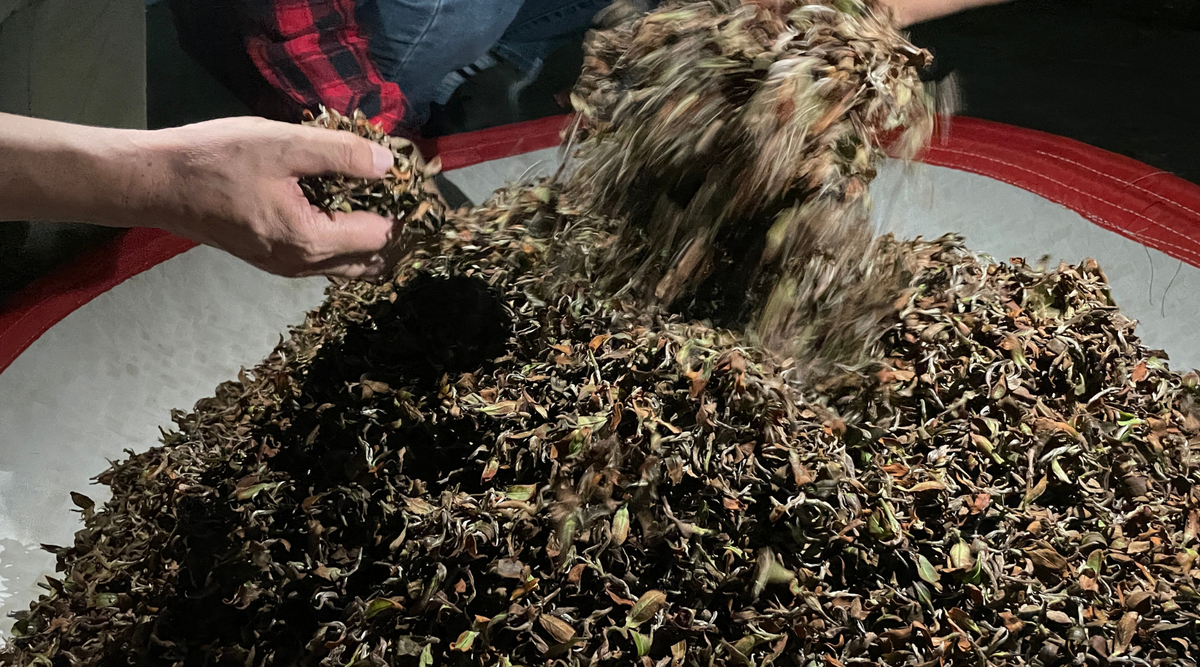
Oxidation is a natural change that begins once tea leaves are handled after picking. When a leaf is bruised or rolled, its cell walls break and the enzymes inside react with oxygen. This reaction transforms catechins, the leaf’s natural antioxidants, into theaflavins and thearubigins, the compounds that darken the liquor and shift flavor from bright to full-bodied.
In oolong, this reaction is halted early. The leaves are lightly bruised to start the process, then quickly heated to fix the leaf before it darkens fully. Depending on the style, oxidation can sit anywhere from around 15 percent to more than 80.
In black tea, the reaction is allowed to reach its endpoint. The leaves are fully oxidized, rolled to expose more surface, and left to deepen in color until they turn copper or brown. Heat is applied only when the maker is satisfied with the profile.
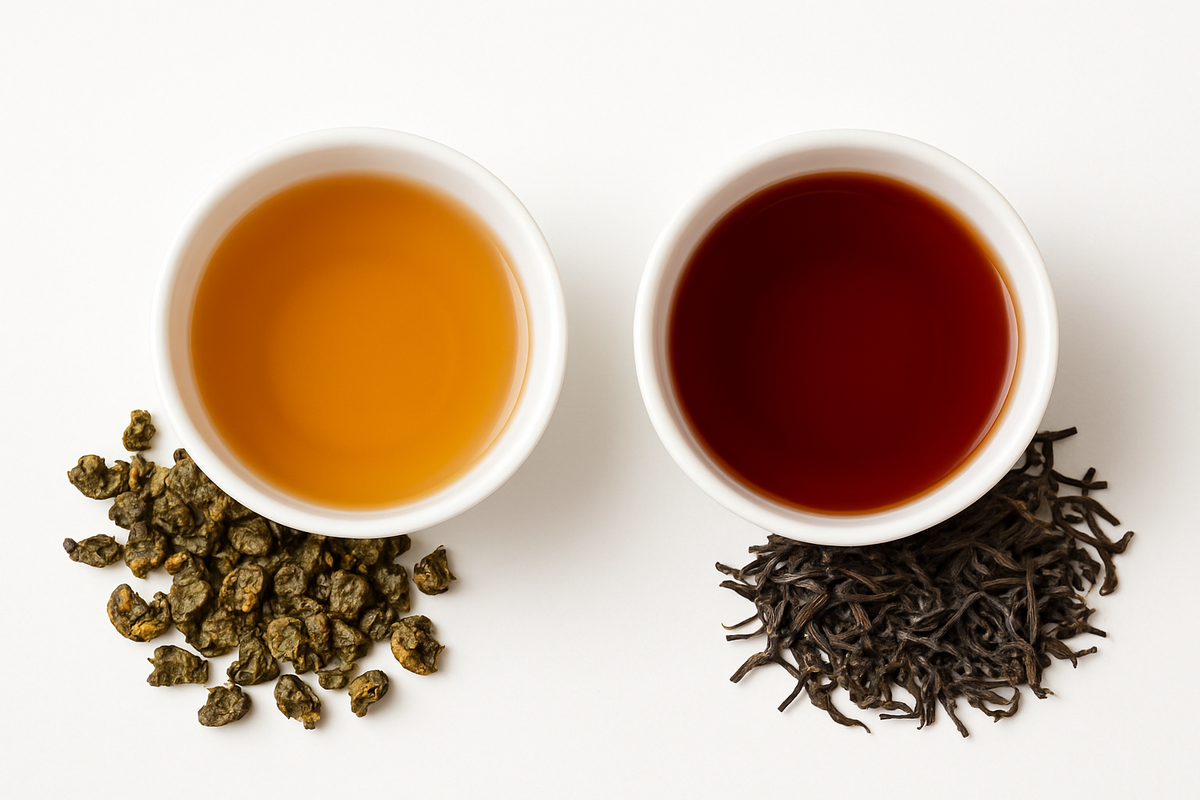
Oxidation sets the foundation, but it’s not the only influence. Cultivar, elevation, and roast shape the details. Partial oxidation preserves brightness and floral lift, while full oxidation builds depth, color, and strength.
These guidelines align with most of our oolong and black tea. Adjust for your kettle, water, and cup size. Even small changes in temperature or time can shift how a tea shows itself.
Western: 190–205 °F (88–96 °C) for 3 to 4 minutes. Lighter, greener oolongs do best with lower temperatures, while roasted or higher-oxidation styles respond well to hotter water.
Gongfu: Use near-boiling water and short infusions—about 15 to 25 seconds to start, then add a few seconds with each pour. This style brings out the full range of an oolong, revealing new layers as the session goes on.
Western: 205–212 °F (96–100 °C) for 3 to 5 minutes. For delicate first-flush or high-grown teas, brew slightly cooler, around 195 °F, with a shorter steep to keep their citrus and floral notes intact.
Milk or no milk? Let the tea decide. Yunnan and Assam-style blacks hold up well to milk. High-elevation and more delicate tea leaves are better enjoyed plain, where their clarity can stand on its own.
For temperature ranges and ratios by tea type, see our dedicated brewing guides.

Pick Oolong if… you want nuance to pay attention to: florals, cream, stone fruit, a roast that reads as warmth rather than smoke. You like a session that unfolds over several infusions, not one loud moment.
Pick Black if… you want straightforward depth: malt, cocoa, biscuit, dried fruit. You reach for sturdier body in the morning, or you plan to add a touch of milk.
Both are honest expressions of the same leaf. Craft and oxidation decide the personality.
No. Both come from Camellia sinensis, but oxidation separates them. Oolong is only partially oxidized—the process is stopped early to preserve florals and sweetness. Black tea is fully oxidized, developing darker color and a stronger, maltier body.
Usually, black tea averages slightly higher caffeine, but there’s overlap. Caffeine depends more on leaf grade, ratio, and brew time than oxidation itself. A long-steeped oolong can outpace a short-steeped black.
Oxidation converts tea’s natural antioxidants (catechins) into theaflavins and thearubigins—the compounds that deepen color and body. Stopping oxidation early keeps freshness and floral notes; letting it continue builds malt, cocoa, and spice.
Not exactly. Oolong prefers slightly cooler water (190–205 °F) and shorter infusions to preserve aroma. Black tea benefits from near-boiling water (205–212 °F) to extract full body. If you’re using gongfu, oolong’s layered oxidation will reward you over multiple short steeps.
Choose oolong if you like nuance—floral, buttery, or gently roasted notes that evolve through each steep. Choose black tea for depth—cocoa, malt, or dried fruit, with more weight and structure. Both express craftsmanship; oxidation just steers them in different directions.
Previous Article
Bruising is a deliberate step in oolong tea making that helps develop aroma, depth, and complexity. Learn how gentle leaf damage shapes flavor.
Next Article
All true tea comes from one plant. The differences come from how the leaves are processed. Learn what actually changes, and why it matters in the cup.
