Your Cart is Empty


Why Tea Pricing Feels Inconsistent (And What Actually Impacts Cost)
Why does tea pricing feel inconsistent? Learn what actually impacts tea cost, from yield and labor to processing, logistics, and matcha production.

Green, black, and oolong tea all come from Camellia sinensis. What separates them is not the plant, but how the leaf is processed after harvest.
Oxidation, heat, handling, and finishing determine how a tea develops and how it performs in the cup. Understanding those steps explains most of the differences people experience between tea types.
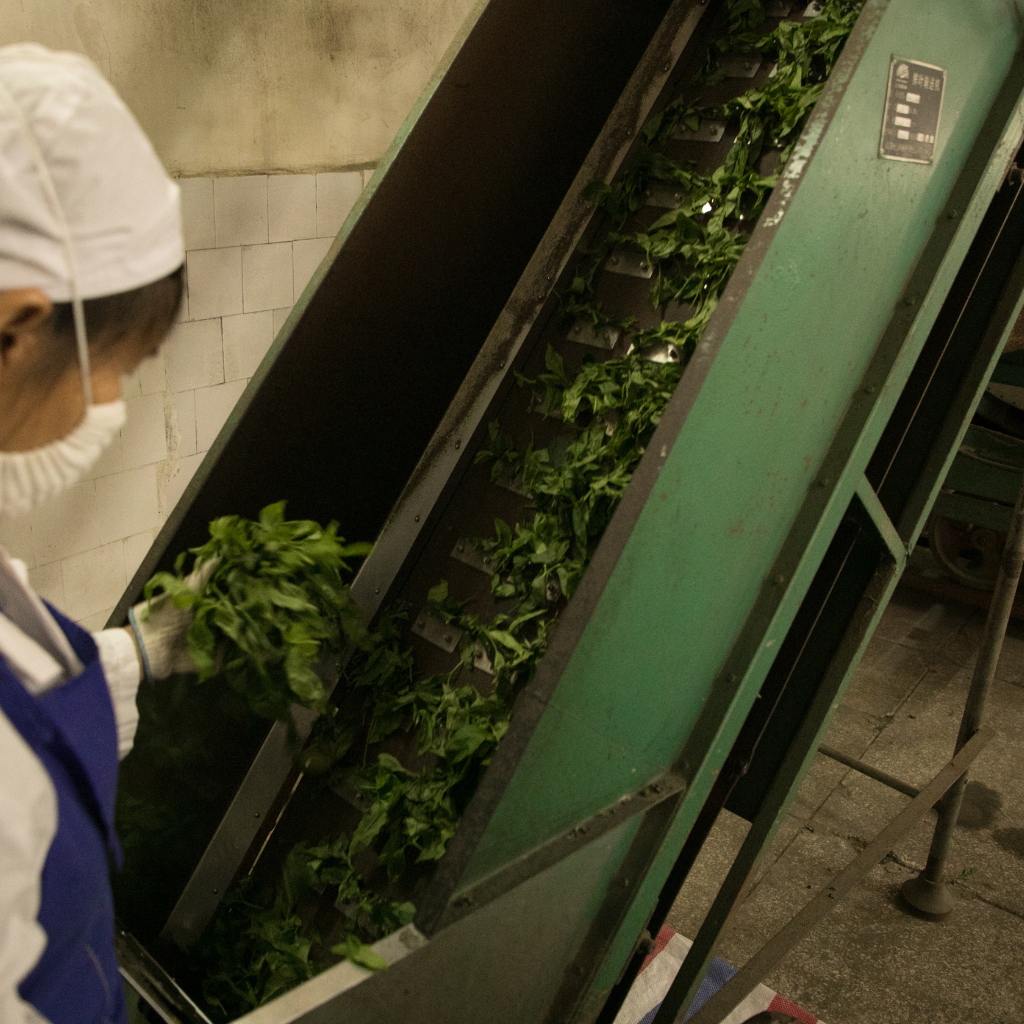
Tea classification exists because it’s helpful, not because it’s precise. The same plant can produce very different results depending on cultivar, harvest timing, climate, and how the leaf is handled after picking.
Oxidation is the most visible dividing line between tea types, but it doesn’t tell the whole story. Processing choices beyond oxidation — how a leaf is heated, shaped, rested, or finished — are often what separate two teas that technically belong to the same category.
If you strip the romance out of tea writing, the leaf is doing three things over and over:
The “type” a tea ends up being is mostly decided by how those three actions are managed.
Withering is controlled dehydration. Fresh leaves are too rigid to process; they need to soften before they can be rolled or shaped without breaking.
How withering is done varies widely. It can be fast or slow, indoors or outdoors, warm or cool. Those choices affect more than moisture loss. As the leaf softens, internal changes begin, setting the stage for everything that follows.
Oxidation is the primary dividing line between tea types. Once a leaf is plucked, enzymes begin reacting with oxygen, changing the leaf’s chemistry.
Less oxidation tends to preserve greener, sharper character. More oxidation shifts aroma and body toward deeper, rounder profiles. In practice, oxidation isn’t measured precisely. Producers rely on smell, color, texture, and experience to decide when to stop the process.
Fixing applies heat to deactivate the enzymes that drive oxidation. This step stabilizes the leaf.
In green tea production, fixing happens early to preserve fresh, green character. In other styles, fixing is delayed to allow oxidation to progress first. Method matters as well. Steaming and pan-firing halt oxidation differently, producing distinct textures and aromatics even from the same leaf material.
Rolling and bruising aren’t just about shaping the leaf. They deliberately damage cell walls, allowing enzymes and oxygen to interact more efficiently and altering how the tea extracts in water.
In black tea, rolling is typically more forceful. In oolong production, bruising is often done in stages, with rest periods in between, encouraging selective oxidation. This step is a major reason oolong shows such a wide range of outcomes from similar starting material.
Drying removes remaining moisture and effectively ends active processing. Roasting, when used, is a finishing step rather than a requirement.
Roast level can be light or heavy, subtle or transformative. In some traditions it defines the tea’s character; in others it’s rarely applied. Either way, it’s a deliberate choice rather than a default part of tea production.
Fermentation and aging are often confused with oxidation, but they’re not the same thing.
Oxidation is enzymatic and happens during production. Fermentation, as seen in shou pu’er and many dark teas, is microbial and occurs after the tea is made. Aging can involve slow oxidation over time or deeper microbial transformation, depending on the tea and storage conditions.
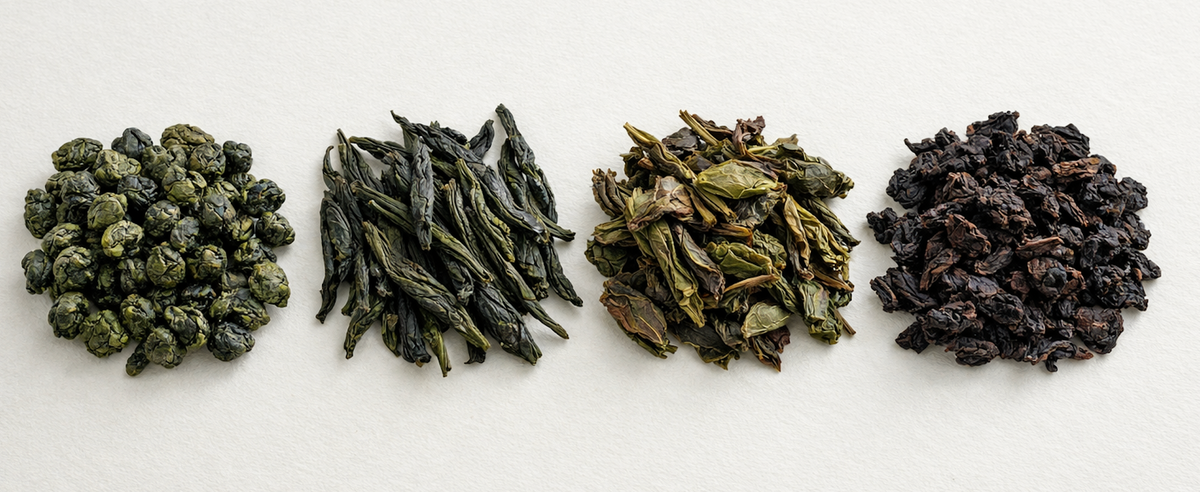
Tea is often grouped into five or six types because the framework is practical. It’s widely understood and helps people orient themselves quickly.
Problems start when those categories are treated as fixed identities. Teas within the same type can behave very differently depending on cultivar, harvest timing, fixing method, leaf shape, and drying style.
Oolong makes this especially clear. It isn’t a single style, but a broad range of processes that happen to fall between green and black tea in terms of oxidation.
Oxidation is a helpful organizing principle. It just doesn’t explain enough on its own.

This is a common question, and most answers online either go full wellness blog or hand-wave it away.
All true tea contains caffeine. That part is simple. The complicated part is how caffeine shows up when it’s packaged with different combinations of amino acids, polyphenols, and extraction behavior.
Some tea feels more linear and immediate. Some feels slower, steadier, or more rounded. Part of that is chemistry, part of it is brewing, and part of it is dose.
Matcha is a special case because you’re consuming the entire leaf rather than infusing and discarding it. That changes intensity and timing, and it’s one reason matcha feels distinct even compared to other green tea.
The point is: “caffeine content” alone doesn’t explain experience, and tea isn’t a uniform delivery system.
A few practical heuristics that generally hold up:
If you take one thing from all of this, make it practical: tea types are not separate plants. They’re results.
Once you start paying attention to what was done to the leaf, labels become more useful, marketing gets easier to see through, and you can choose tea with more confidence, whether you’re buying for taste, for ritual, or just to get through the afternoon.
All true tea does: green, white, oolong, black, and dark teas all come from Camellia sinensis. Herbal “tea” are infusions made from other plants.
Not in the technical sense. It’s a tisane. That distinction matters if you’re trying to understand processing, caffeine, or traditional classification.
White tea still contains caffeine. It can feel gentle because of how it extracts and how it’s processed, but the plant itself is caffeinated.
No. Many dark teas are post-fermented. That’s not “more oxidation.” It’s a different kind of transformation.
Because it’s the broadest category by process. Producers use countless variations in bruising, rest cycles, fixing, shaping, and roasting, and those variations create entirely different outcomes.
Previous Article
Why does tea pricing feel inconsistent? Learn what actually impacts tea cost, from yield and labor to processing, logistics, and matcha production.
Next Article
Loose leaf tea and tea bags are built for different outcomes. Learn how leaf size, flavor extraction, cost, and convenience really compare.
