Your Cart is Empty


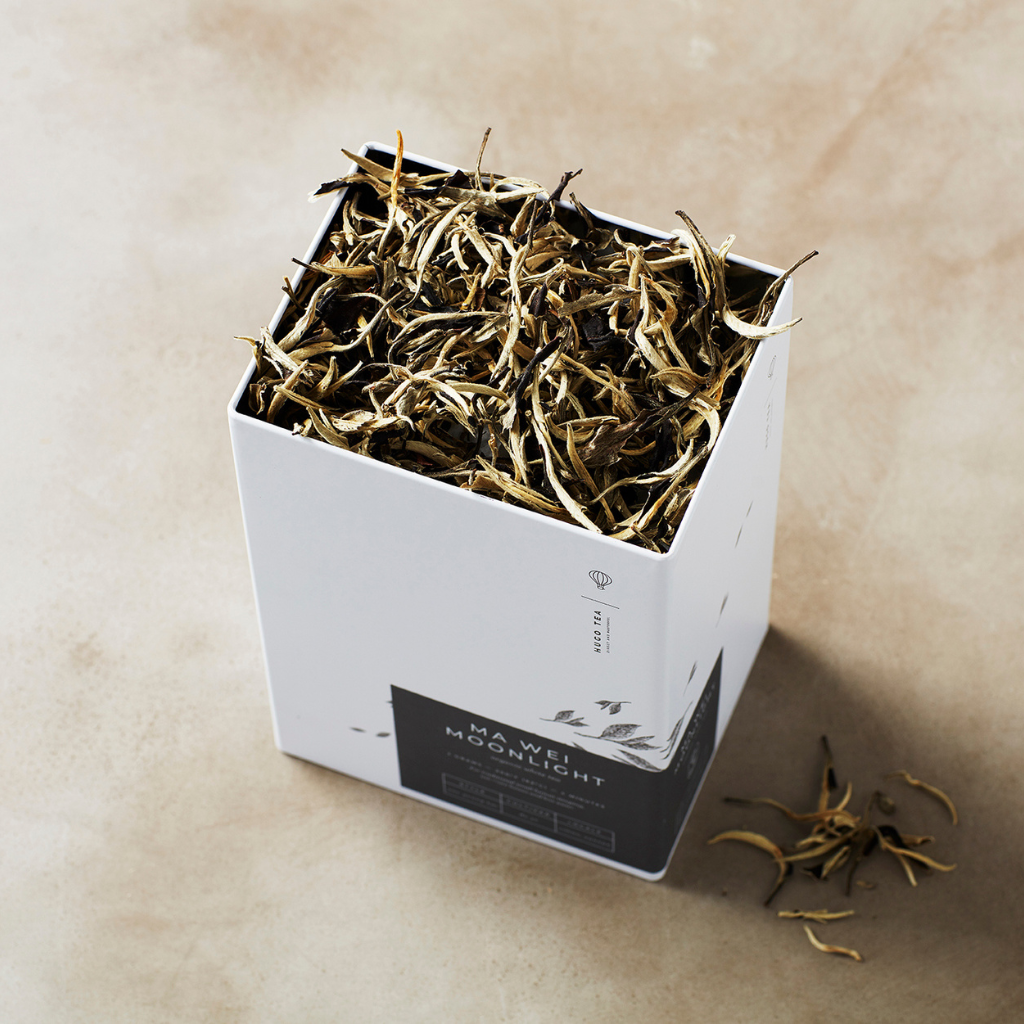

How One Tea Plant Becomes So Many Different Tea Types
All true tea comes from one plant. The differences come from how the leaves are processed. Learn what actually changes, and why it matters in the cup.

Loose leaf tea and tea bags both exist for a reason. One isn’t inherently virtuous and the other inherently flawed. But they are built for different outcomes.
If you’re trying to decide which makes more sense for your daily routine, the real differences come down to leaf quality, flavor expression, brewing control, cost over time, and convenience. Once you understand those variables, the choice tends to make itself.
This guide looks at the real distinctions between loose leaf tea and tea bags, in plain terms.
Before getting into the details, here’s the short version:
They serve different purposes, and that’s the point.
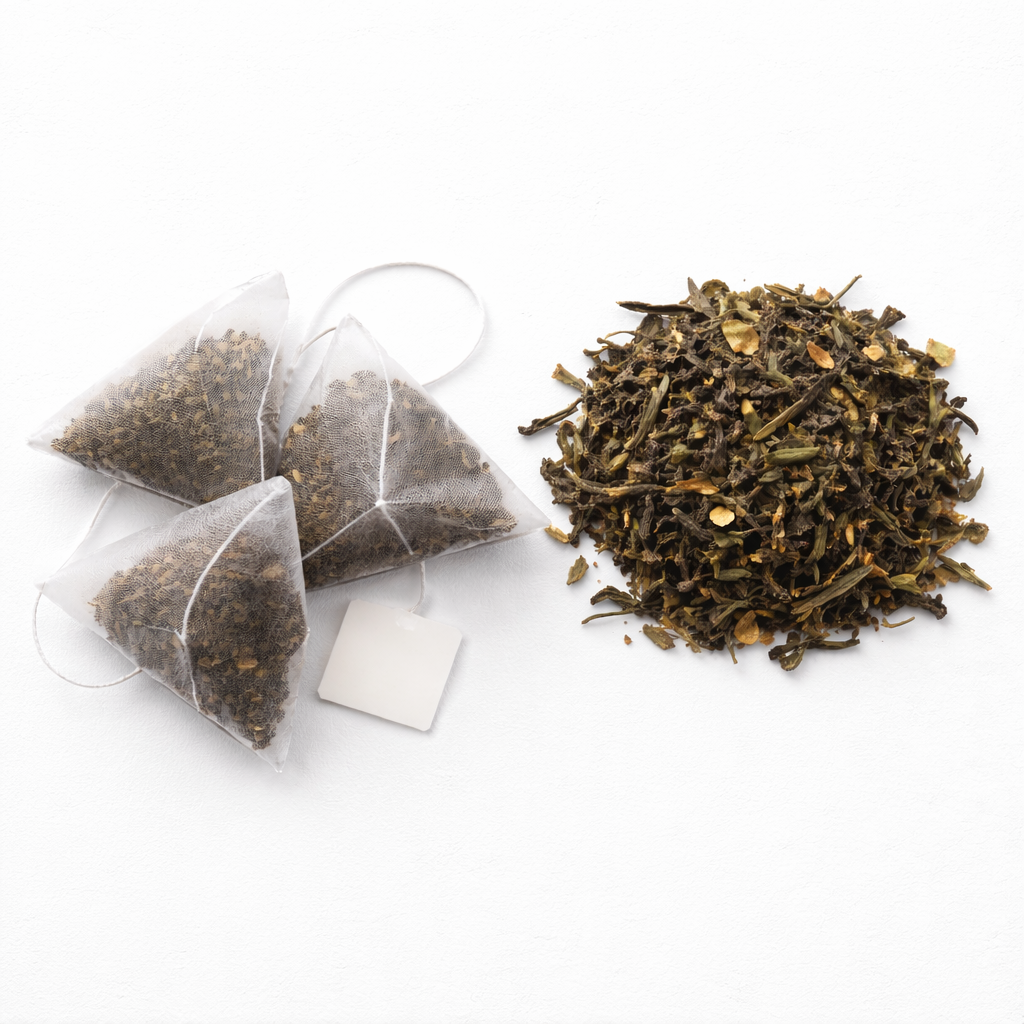
The biggest structural difference between loose leaf tea and tea bags is leaf grade.
Loose leaf tea is typically made from whole or large broken leaves. These leaves retain their cellular structure, aromatic compounds, and chemical balance more effectively during processing and storage.
Most conventional tea bags are filled with small leaf particles, often referred to as fannings or dust. These aren’t inherently unsafe or unusable, but they are designed to extract quickly and aggressively. That fast extraction produces a strong cup with minimal steep time, but it also limits nuance.
This is why bagged tea often tastes uniform from cup to cup, while loose leaf tea tends to show more variation depending on how it’s brewed.
It’s worth noting that higher-end tea bags do exist. Some contain larger leaf material. They are the exception, not the rule, and usually cost closer to loose leaf tea anyway.
Tea flavor develops through extraction. The size and structure of the leaf determines how that extraction happens.
Large leaves unfurl gradually in water. As they open, different compounds dissolve at different rates, producing layered aroma and flavor. This is where sweetness, florality, bitterness, and texture find balance.
Small particles extract all at once. That speed creates intensity, but it also collapses complexity. The result is often a sharper, flatter cup with fewer aromatic highs and a narrower margin for error.
The outcome follows directly from how the leaf is built and how it interacts with water.
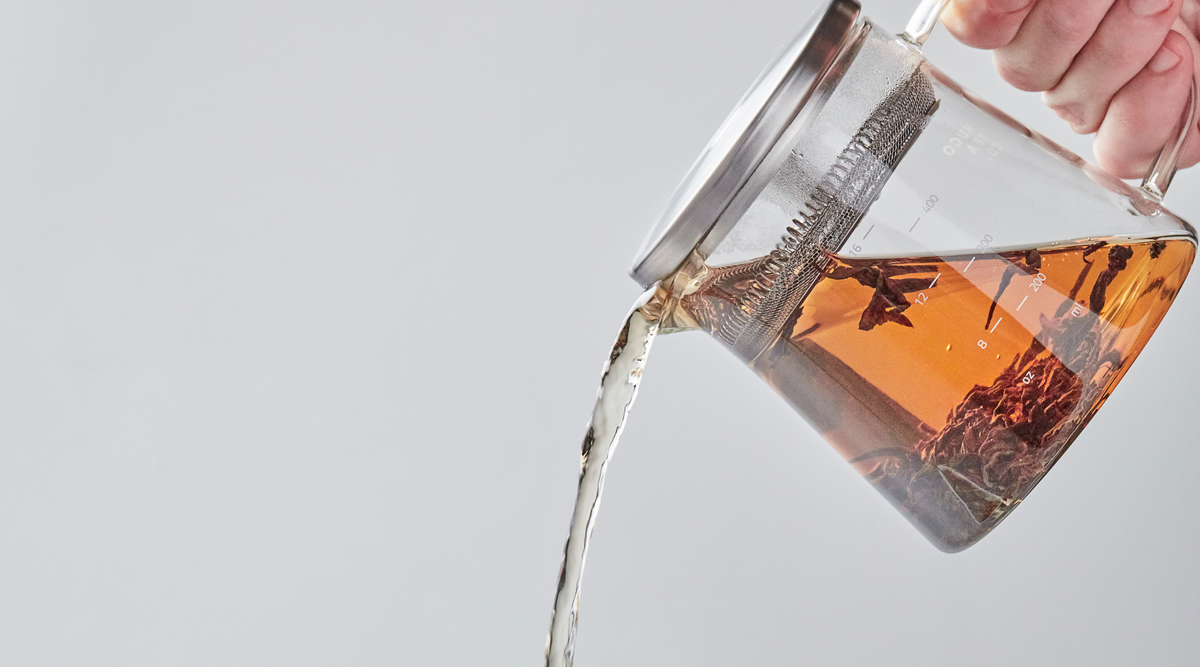
Loose leaf tea gives you control. Tea bags give you predictability.
With loose leaf, you can adjust:
If a cup is too bitter, you shorten the steep or lower the temperature. If it’s thin, you add leaf or extend extraction slightly. Many teas can be steeped multiple times, spreading flavor across several cups.
Tea bags remove most of those variables. They’re designed to produce a consistent result in a narrow window, which is useful when time or attention is limited.
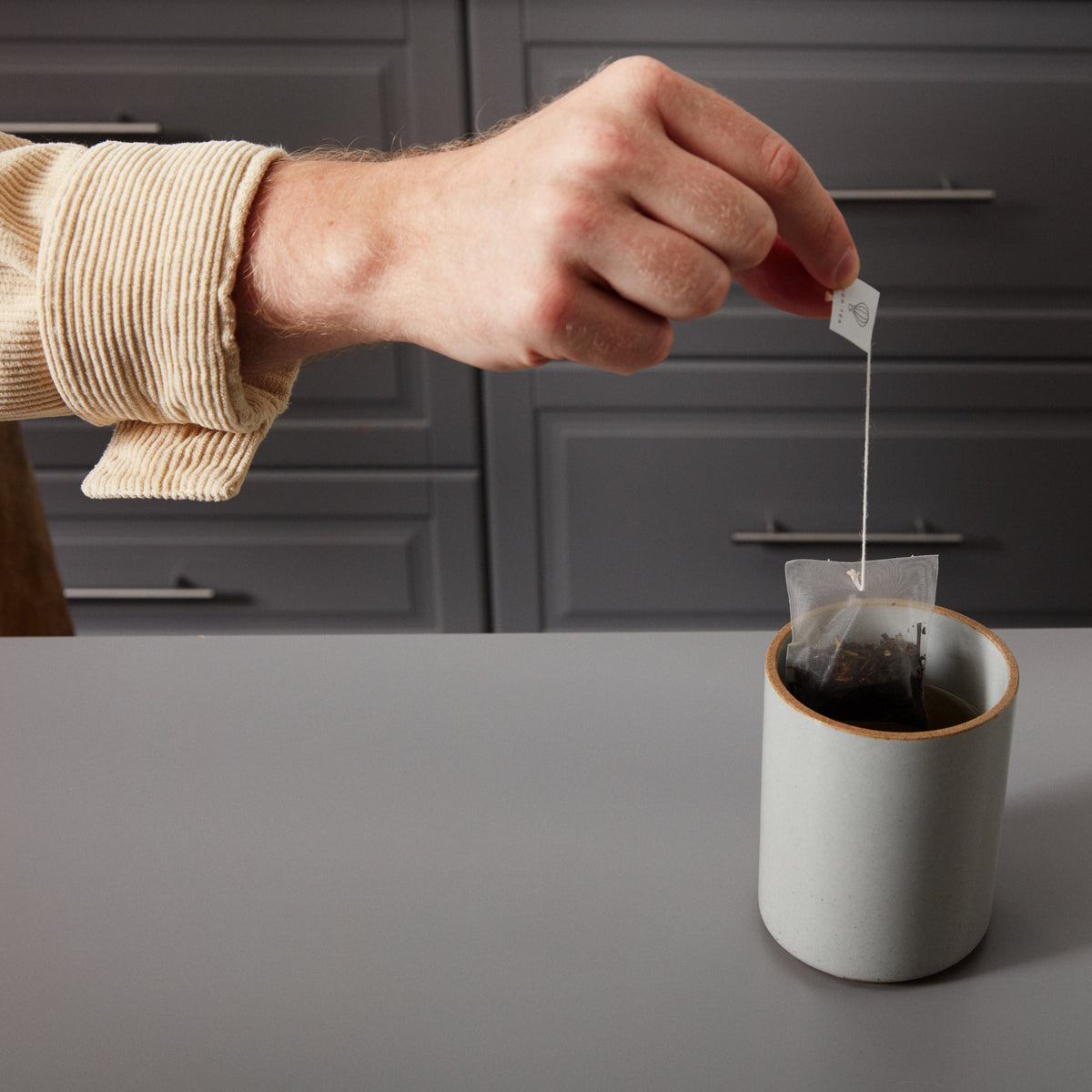
Tea bags exist because convenience matters.
They travel well. They’re easy to portion. Cleanup is minimal. In offices, airports, hotels, and rushed mornings, they make sense.
Loose leaf tea requires one additional tool, usually a basket infuser or strainer, and a small amount of attention. That extra step is often overstated, but it’s still a step.
If tea is a background habit, tea bags are practical. If tea is something you want to engage with, loose leaf makes more sense.
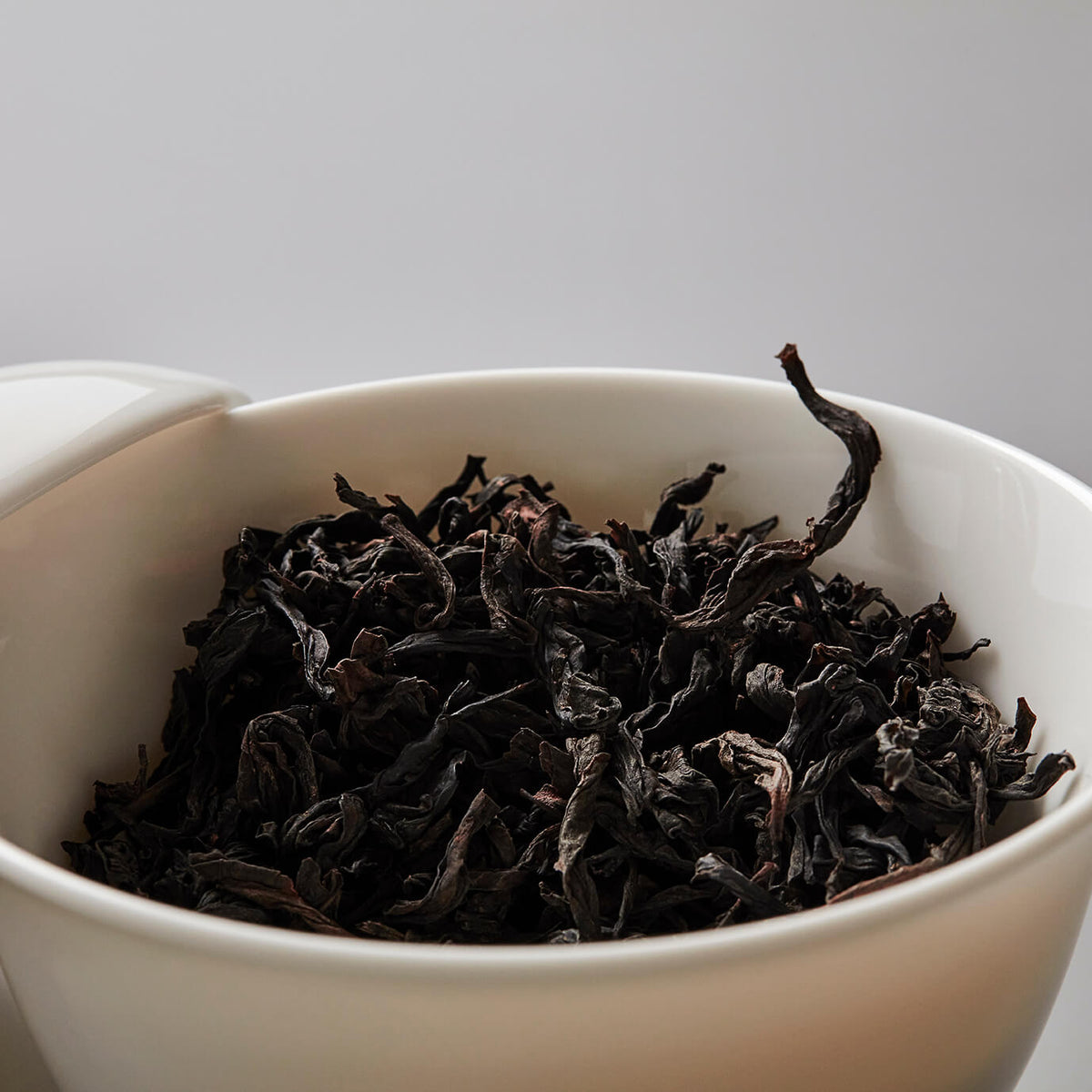
Loose leaf tea often appears more expensive upfront, but cost per cup tells a different story.
Loose leaf is sold by weight, not by unit. Many teas yield more cups per gram than expected, especially when re-steeped. Over time, the cost per serving often lands close to, or below, higher-quality bagged teas.
Tea bags, by contrast, fix the dose. You know exactly what you’re getting, but you’re paying for packaging, portioning, and convenience built into each unit.
Tea bags aren’t made from a single material. Some are paper-based. Others use plastic-derived meshes designed to hold their shape and allow water to circulate around the leaf.
In recent years, questions have surfaced around how different bag materials behave when exposed to heat, including whether micro- or nano-scale particles are released during brewing. Research in this area is still developing, and conclusions remain limited. What is clear is that material choice matters, and transparency around those choices is important.
For single-serve tea, some producers use plant-based bioplastics like PLA, which are approved for food contact and widely used across the specialty tea industry. Like any material, PLA comes with trade-offs that are worth understanding in context.
Loose leaf tea removes the question entirely. There’s no mesh, no polymers, just leaf and water.


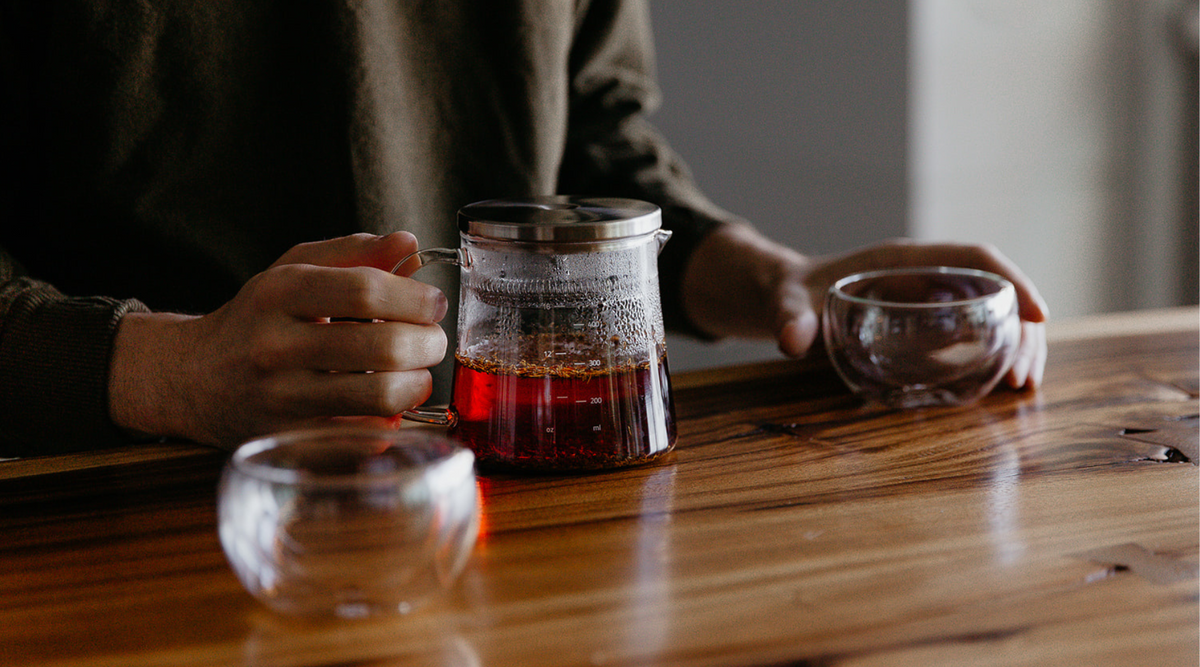
Getting started doesn’t require ceremony.
The process improves quickly with repetition. Precision comes later.
Health outcomes depend on tea type, brewing method, and overall diet. Loose leaf offers more control, but neither format is inherently “healthy” or “unhealthy.”
Caffeine contentdepends on leaf variety, ratio, temperature, and steep time, not whether the tea is bagged or loose.
They allow more space for expansion, but quality still depends on the leaf inside and the bag material.
It requires an extra tool and a bit of attention, but the process is simple and forgiving once familiar.
Previous Article
All true tea comes from one plant. The differences come from how the leaves are processed. Learn what actually changes, and why it matters in the cup.
Next Article
Not all tea benefit from aging. Learn which tea improve with time, which are best fresh, and how to store them so they evolve properly.
