Your Cart is Empty


Exploring Tea Types: Green Tea
Learn about how heat fixing preserves green tea’s vibrant color and fresh flavor, making it one of the world’s most historic and widely enjoyed tea types.

Author: Max McPartland
Matcha has become a staple on modern café menus. For high-volume shops, though, it can be tricky to serve without disrupting workflow. Many have turned to batch brewing, a method that blends matcha into a concentrate used throughout the day. But does it compromise quality?
There’s no single right way to make matcha. There is, however, good and bad matcha, and good and bad preparation. If batch brewing helps your café serve matcha efficiently and consistently, there’s nothing wrong with it. Just approach it with the same care you would a made-to-order whisked bowl.
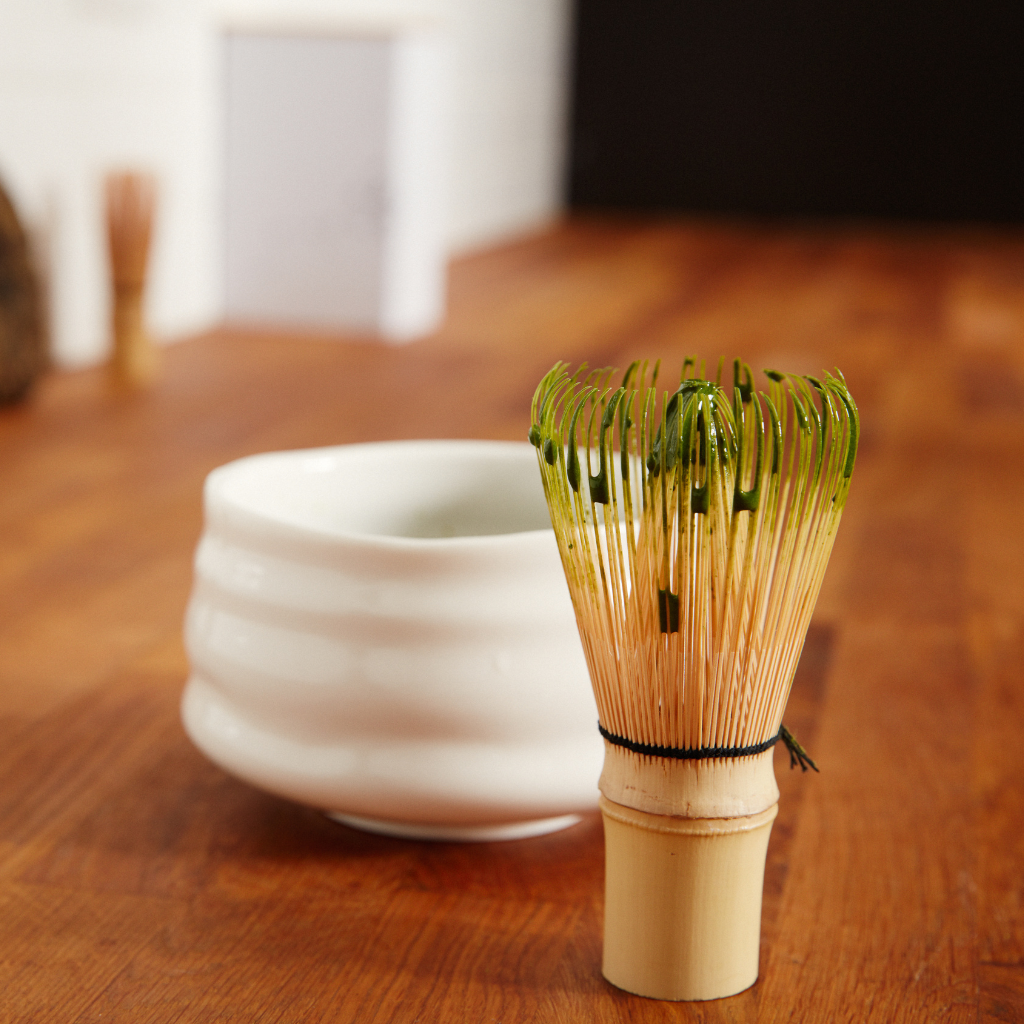
All tea is oxidized to a final point during processing. Once finished, additional oxidation dulls aroma, color, and flavor. This is especially true for matcha. The moment tencha is milled into matcha powder, it begins to oxidize, slowed only by airtight storage.
When matcha is whisked (or blended) into water, oxidation accelerates. In theory, this makes batch brewing less than ideal. In practice, if you make your batch in the morning and use it within the same day, the difference in taste, color, or aroma is negligible. In other words: if this is what makes serving matcha possible behind bar, it’s perfectly fine.
Batch-brewed matcha should always be made for day-of use only. The biggest factor in cup quality remains the same: the matcha itself. Use a high-quality, fresh, ceremonial-grade powder and prepare it carefully.
Ratio: 1:10
So, for one of our 80-gram tins, you would use 800mL of water.
The batch would then yield 13 servings at 60mL (2oz) pours.
Each drink should use about 2.5 fl oz (≈74 mL) of concentrate. Discard any remaining batch after 24 hours.
This method is perfect for matcha lattes, where the milk or milk alternative softens any texture loss and consistency is key for volume service.
It should never be used for straight matcha service, where the foam texture and suspension achieved by whisking are essential. Batch brewing removes that signature foam, and even high-grade matcha will lose clarity and mouthfeel when treated this way.
Previous Article
Learn about how heat fixing preserves green tea’s vibrant color and fresh flavor, making it one of the world’s most historic and widely enjoyed tea types.
Next Article
Preserving the flavor and aroma of matcha with the right packaging.
